Summer Heat and Storms Strain Remote Security Networks
 Maya ChenContributing Editor
July 23, 2026 — Extreme summer heat and unpredictable seasonal storms are currently testing the operational limits of off-grid surveillance hardware across the United States. While the industry pushes for higher resolution, the actual failure points remain thermal throttling and connectivity loss during atmospheric interference.
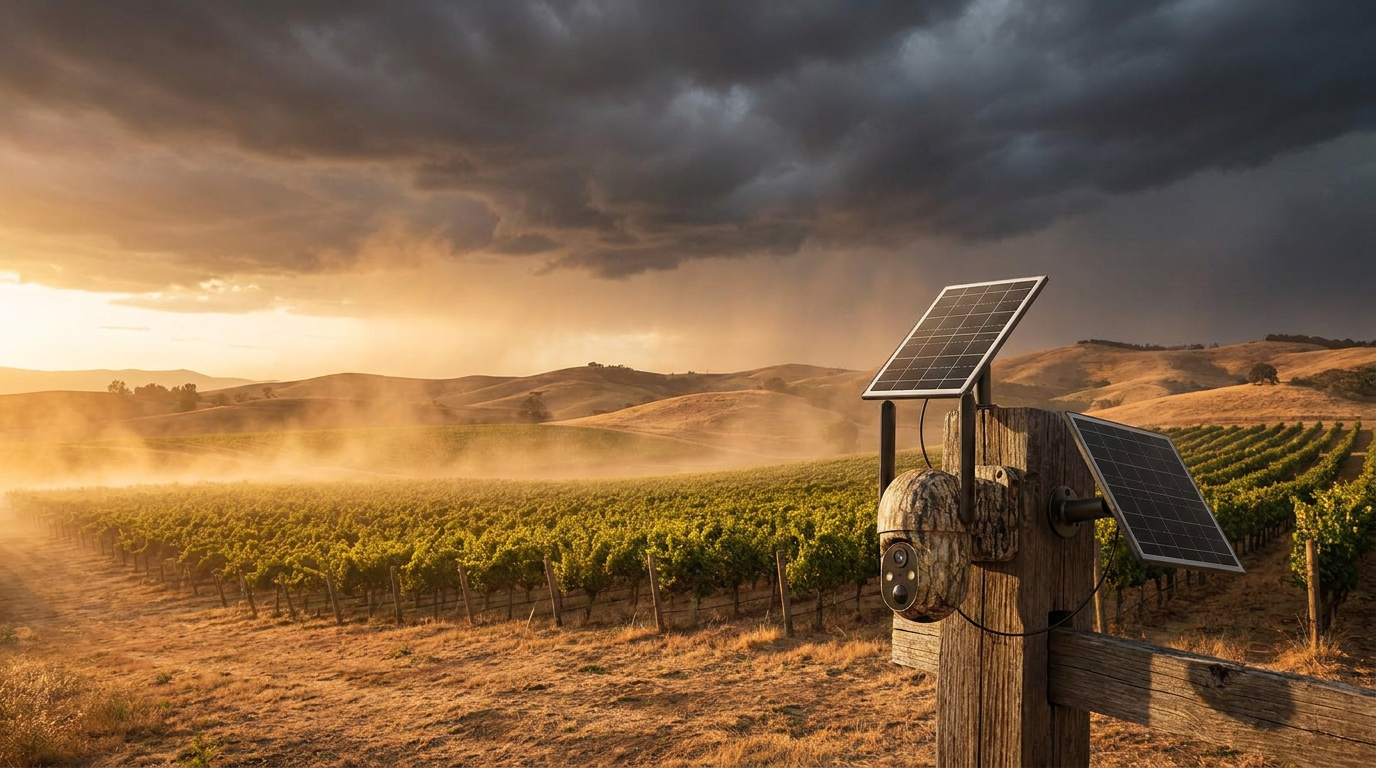
The conventional wisdom says that any outdoor-rated camera can handle a standard American summer. Run the math: according to Toucan Solution, outdoor cameras must endure not just direct UV exposure but also high humidity and sudden rain, which can lead to internal condensation or hardware fatigue. For properties relying on Solar Watch Cam, the IP65 rating and operating range of -4°F to 122°F provide a baseline, but the 4G LTE integration is where the real stress test occurs.
Photo by Atypeek Dgn on Pexels
Defend Cell Cam reports that while cellular cameras maintain real-time property connections during intense storms, signal attenuation is a physical reality when heavy precipitation interferes with 4G bands. Here's the part nobody talks about: solar efficiency often drops during the very heatwaves that necessitate high-frequency monitoring. When temperatures hit the 120°F ceiling, battery chemistry can become volatile. Solar Watch Cam attempts to mitigate this with a dedicated solar panel designed for year-round charging, yet the hardware still faces the same physics as any other silicon-based device.
Maintaining a consistent link requires more than just a battery. It demands a rigorous Our Commitment to Reliable Security at Solar Watch Cam to ensure the AI-driven person and vehicle detection doesn't trigger false alerts during high-wind events. Botslab notes that outdoor cameras are engineered for these environmental challenges, but performance often degrades if the 2K HD sensors are not kept clear of dust and debris common in rural job sites.
Expert tip: When installing hardware on remote ranches or vacation properties, mount the unit with at least six inches of clearance from heat-retaining surfaces like metal siding. This reduces the ambient thermal load on the internal 4G modem, ensuring the Solar Watch Cam maintains its 360-degree view without thermal shutdown. Regularly check that the SD card slot remains sealed against humidity to prevent data corruption during the summer storm season.
I'll change my mind when I see a consumer-grade solar unit maintain 100% uptime through a sustained 125°F heatwave without a cooling failure. Until then, mechanical resilience remains the only metric that matters.