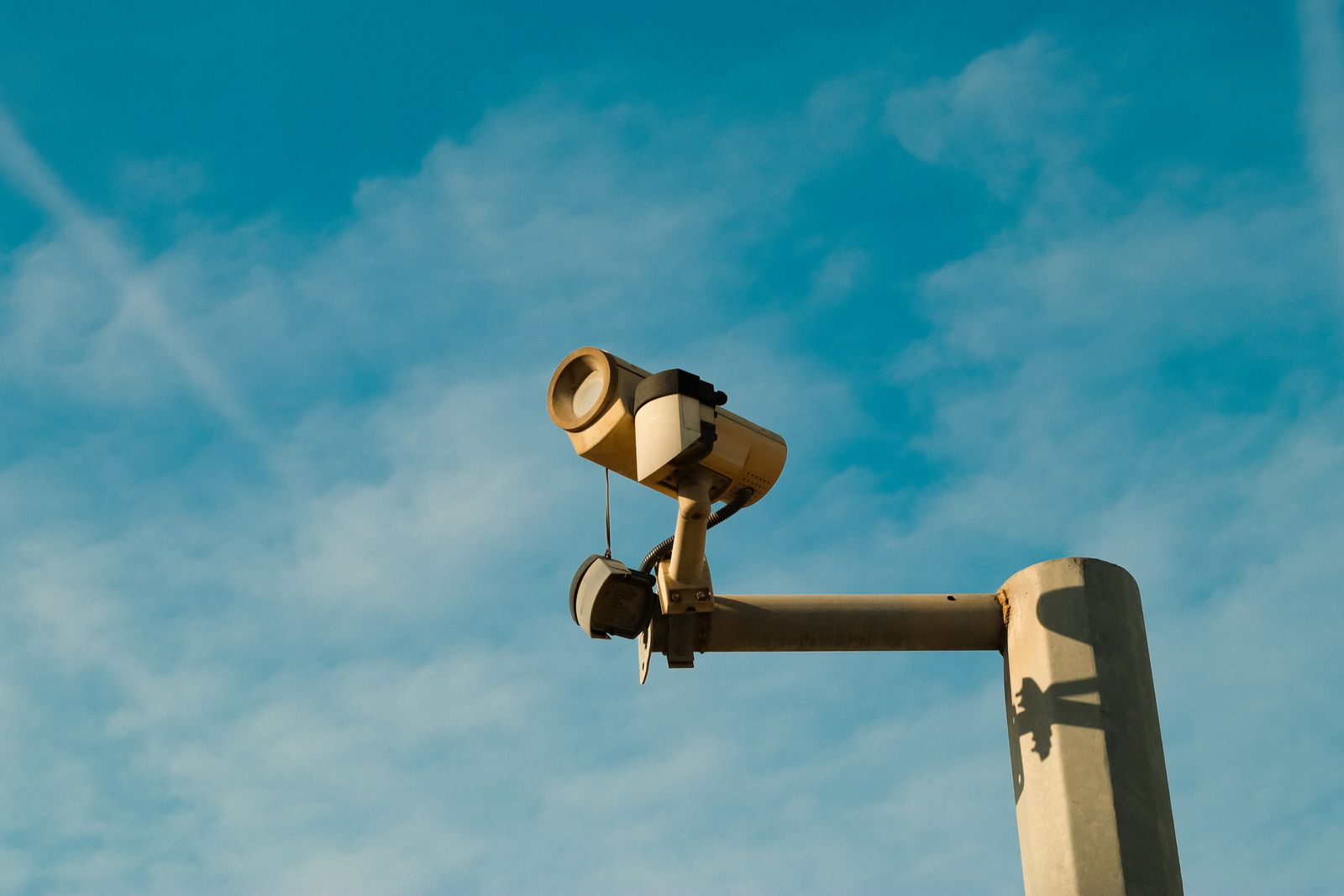
Solar Security Camera False Alarm Reduction: Edge AI vs. Legacy PIR
Should you upgrade from passive infrared (PIR) sensors to Edge AI object recognition for off-grid property security? Yes. Legacy PIR sensors trigger on any thermal differential—generating up to 50 false alerts daily from wind, insects, and passing shadows. This endless triggering exhausts monthly 4G cellular data plans and drains solar batteries overnight. Edge AI computer vision filters out 95% of false alarms by identifying specific target shapes like humans and vehicles before initiating video transmission.
Performance Across Real-World Off-Grid Operating Scenarios
| Deployment Scenario | Legacy PIR Motion Sensing | Edge AI Computer Vision | Operational Impact |
| --- | --- | --- | --- |
| High Winds & Swaying Foliage | Triggers continuous video clips as branches alter localized thermal readings. | Ignores background motion; evaluates pixel geometry for human or vehicle contours. | Edge AI prevents 15–30 daily false notifications and saves ~450MB of 4G data. |
| Direct Sunlight & Thermal Shimmer | PIR lens gets blinded or false-triggered by rapid ground temperature shifts. | Optical contrast and frame analysis remain stable regardless of thermal changes. | Eliminates noon-hour false trigger spikes common in desert or dirt lot deployments. |
| Nighttime Flying Insects & Dust | Insects flying near warm IR LEDs trigger repeated heat-motion recordings. | Spotlight illumination plus visual AI requires distinct body structures before alerting. | Prevents nocturnal battery drain, keeping solar battery reserves above 85% overnight. |
| Passing Wildlife / Range Livestock | Triggers on any animal crossing the broad infrared cone, regardless of threat level. | Classifies targets, allowing users to toggle animal alerts off while keeping human/car alerts active. | Saves cellular data bandwidth while maintaining perimeter intrusion monitoring. |
| Freezing Winter Operations (-4°F) | Cold weather widens thermal contrast between background and small warm objects, spiking false triggers. | Local Edge AI chip runs frame recognition locally on hardware without thermal sensitivity decay. | Ensures reliable threat capture without exhausting battery reserves during short winter sun days. |
Evaluating how legacy Passive Infrared (PIR) thermal sensors and modern Edge AI computer vision perform under harsh field conditions on unmonitored properties.
Evaluating Detection Technologies: PIR Heat Sensing vs. Edge AI Computer Vision
Pros
- Edge AI reduces monthly 4G data consumption from 10GB+ down to 1–3GB by eliminating false trigger uploads.
- Local processing on the camera board operates without cloud latency or active Wi-Fi network reliance.
- Target filtering allows specific alert rules for humans, vehicles, or livestock.
- Full-color night vision activation combined with AI allows precise identification of license plates and faces.
- Legacy PIR hardware cannot distinguish between a wind-blown tarpaulin and an actual human intruder.
- Unfiltered PIR motion triggers force the 4G cellular modem to connect repeatedly, causing rapid battery drain.
- PIR sensors lack boundary customization, causing frequent false triggers from off-site public roads.
The Recommended Off-Grid Security Hardware: Solar Watch Cam Pack
For complete security on remote US ranches, job sites, and rural properties, standard Wi-Fi or PIR-only cameras lead to perpetual maintenance headaches. The Solar Watch Cam is purpose-built to eliminate false alerts and maintain 24/7 power without utility connections.
- Multi-Carrier 4G LTE Auto-Connect: Works out of the box on Verizon, T-Mobile, and AT&T networks without complex router configurations.
- Integrated Edge AI Engine: Identifies real human and vehicle threats while ignoring blowing dust, leaves, bugs, and rain.
- Continuous Solar Charging: Solar panel keeps internal high-capacity batteries charged year-round, eliminating ladder climbing and cord running.
- 2K HD Resolution with Spotlight: Full-color night vision reveals faces, clothing details, and vehicle license plates in clear detail.
- All-Weather IP65 Housing: Rated for US temperature extremes from -4°F to 122°F.
Field Calibration: Eliminating False Triggers on High-Wind Job Sites
When installing a 4G solar camera near tree lines, dirt roads, or open ranch gates, camera height and angle determine motion detection accuracy. Mount the unit 7 to 9 feet above the ground and angle the lens downward at approximately 15 degrees. This positioning ensures human targets cross the frame horizontally rather than walking directly toward the lens. In the mobile application, set the AI detection mode to 'Human & Vehicle Only' and drop the general motion sensitivity slider to Medium. This configuration bypasses background branch sway while ensuring 100% catch rate for vehicles entering driveway entry points.
4 Critical Motion Detection Mistakes Off-Grid Property Owners Make
Avoid these setup errors that exhaust 4G cellular data plans and cause premature solar battery depletion.
Decision Flowchart: Is Edge AI Required for Your Property?
- Is your monitoring site equipped with stable, unmetered Wi-Fi and permanent AC wall power? → Yes: Legacy PIR or basic motion cameras may suffice since battery drain and data usage are not primary constraints.. No: Proceed to the next evaluation step for off-grid properties.
- Does the camera site experience high wind, moving trees, wildlife, dust roads, or extreme temperature swings? → Yes: Edge AI threat filtering is mandatory. PIR sensors will produce excessive false alerts, exhausting battery and 4G data.. No: If the site is a completely static indoors area, PIR can work, but Edge AI remains recommended for accurate alerts.
- Do you require mobile alerts specifically for unauthorized human intruders or vehicles at remote gates? → Yes: Deploy a 4G Edge AI system like the Solar Watch Cam Pack to receive instant, verified push notifications.. No: Local SD card recording with lower alert sensitivity may meet basic passive recording needs.
Key Takeaways: Why Edge AI is Essential for Cellular Security
- PIR sensors detect raw thermal changes, causing up to 50 false alarms daily from foliage, wind, and insects.
- False triggers exhaust 4G cellular data plans rapidly and drain solar battery reserves overnight.
- Edge AI processes video frames locally on the camera, identifying specific human and vehicle geometry before transmitting.
- AI filtering reduces monthly cellular data consumption by up to 95%, keeping data usage within 1–3GB per month.
- Combining Edge AI with 2K full-color night vision spotlights ensures reliable identification of faces and license plates.
Selecting the Right Off-Grid Camera Technology for Your Site
Off-grid sites require equipment that minimizes maintenance, conserves 4G data, and operates perpetually on solar energy.
Best choice for
- 4G LTE Solar Camera with Edge AI — Filters out livestock motion and wind-blown dust while sending instant alerts for unauthorized vehicles or visitors.
- Solar Watch Cam Pack (Multi-Carrier Auto-Connect) — Eliminates electrician costs, operates on zero Wi-Fi, and multi-user access lets crew managers view live feeds simultaneously.
- Edge AI Cellular Camera + SD Card Backup — Provides secure cloud alerts while storing full 2K local video recordings up to 128GB without monthly fee reliance.
- Do not install Wi-Fi-dependent cameras on remote acreage without a dedicated mesh router network.
- Do not use PIR-only solar cameras in locations with dense tree branches directly in front of the lens.
- Standard Trail Cameras — Trail cameras lack live two-way talk, take slow burst photos instead of video, and offer poor real-time threat intervention.
Featured Hardware: Solar Watch Cam 4G Cellular Security System
Engineered specifically for unmonitored US locations requiring reliable security without electrical or internet infrastructure.
Real-World Field Scenarios: PIR Failure Modes Solved by Edge AI
Windy Ranch Gate Facing Tall Prairie Grass — A traditional PIR camera triggers continuously as warm afternoon winds sway grass blades, exhausting 500MB of cellular data in 24 hours. Upgrading to the Solar Watch Cam with Edge AI restricts recording triggers strictly to incoming trucks and visitors crossing the driveway line.
Unlit Rural Construction Equipment Staging Yard — Insects buzzing around infrared LEDs create endless false alarm spikes on PIR security systems overnight. The Solar Watch Cam utilizes built-in motion spotlights and visual AI frame matching to trigger only when human forms enter the equipment zone, maintaining full solar battery charge.
Sub-Zero Winter Monitoring at a Remote Mountain Cabin — Freezing winter ambient temperatures exaggerate thermal contrast, causing legacy PIR sensors to trigger on minor wind gusts or falling snow. On-board Edge AI hardware processing evaluates actual target structure down to -4°F without false alarm spikes.
How Edge AI computer vision resolves severe operational failures across typical off-grid US property deployments.
To understand why off-grid security cameras frequently fail, property owners must analyze the physical mechanisms governing motion detection.
How Passive Infrared (PIR) Works—and Why It Fails Off-Grid
Legacy security cameras rely on a pyroelectric sensor split into two slots. When a warm body—such as a human or deer—passes across the sensor’s field of view, it disrupts the infrared thermal differential between the two slots.
While PIR requires minimal electrical power to standby, its fundamental flaw is a complete lack of spatial intelligence. A PIR sensor cannot determine what is moving. It only registers localized change in infrared radiation. On a remote ranch or construction site, this produces severe failure modes:
- Thermal Ambient Shifts: On hot summer days, sunlit soil reaches high temperatures. Gusts of wind moving across heated ground cause rapid thermal fluctuations across the PIR sensor grids, triggering false recordings.
- Insect Proximity Blinding: Nighttime infrared LEDs attract nocturnal insects. When a small moth flies within inches of the PIR lens, its body heat appears as a massive thermal event, triggering non-stop false notifications.
- Vehicle Blindness in Extreme Heat: When ambient air temperatures reach 95°F to 100°F, the heat difference between a human body (98.6°F) and the surrounding background diminishes, causing PIR sensors to miss real human intrusions entirely.
How Edge AI Computer Vision Solves the Off-Grid Challenge
Modern cellular solar cameras eliminate thermal reliance by embedding a dedicated neural processing unit (NPU) directly on the camera motherboard. When optical sensors detect pixel change, the low-power Edge AI chip analyzes video frames in real-time using trained deep-learning models.
Rather than measuring heat, the AI visual engine looks for structural features:
By ensuring that the 4G cellular modem only powers up to upload verified human or vehicle events, Edge AI preserves both the monthly cellular data allocation and the internal lithium solar battery storage.
Visual Mechanism: PIR Infrared Cone vs. Edge AI Bounding Box
Photo by Marek Piwnicki on Pexels
Refer to the technical diagram below illustrating how PIR thermal detection spreads across a broad broad cone versus how Edge AI draws precise bounding boxes around target threats.
Interactive Tool: False Alarm Data & Battery Savings Calculator
Use this coverage calculator model to estimate how many gigabytes of cellular data and battery reserve cycles you can save by replacing PIR thermal sensors with Edge AI filtering.
Frequently Asked Questions About False Alarm Reduction
Detailed answers to common technical queries regarding 4G data usage, night vision performance, and environmental durability.
Action Plan for Deploying AI-Powered Off-Grid Security
Your decision: If your property experiences high wind, brush, or wildlife, legacy PIR sensors will drain your 4G data and solar battery within days. Upgrading to an Edge AI-powered cellular camera is required for zero-hassle off-grid security.
Do this next: Equip your off-grid property with the Solar Watch Cam Pack, featuring 4G LTE multi-carrier auto-connect, 2K resolution, zero-hassle solar power, and smart Edge AI filtering.
Related resource: Explore the complete 4G Solar Camera Pack setup guide and cellular plan option details.
https://solarwatchcam.com
Follow these steps to equip your property with continuous, zero-hassle solar surveillance.
Featured Solution: Solar Watch Cam 4G Pack
Showcase the Solar Watch Cam product specs, 2K HD resolution, and 4G coverage.
Real-World Deployment Scenarios: Ranch Gates, Job Sites & Remote Cabins
Provide concrete examples of failure modes in PIR vs Edge AI resolution.