Can Cellular Security Cameras Capture Faces and License Plates at Night? FAQ
A trespasser pulls onto your unlit ranch road at 2:00 AM. You open your phone notification and need to identify the vehicle and intruder instantly. Yes, standard 2K cellular solar security cameras can capture facial features up to 30 feet and license plates on vehicles moving under 15 mph. However, reading plates at night requires switching from infrared (IR) night vision to motion-activated full-color spotlight mode. Standard IR light reflects off retroreflective state license plates, washing them out into featureless white boxes. Position your camera 8 to 10 feet high and 15 degrees off headlight centerlines for crisp detail.
Evaluating Night Identification Capabilities for Off-Grid Properties
High-resolution 2K 4G solar cameras provide an ideal balance of facial identification, full-color night vision, and vehicle tracking for remote properties without requiring dedicated enterprise LPR hardware.
Best choice for
- 2K 4G Solar Camera with LED Spotlight — Vehicle speed is low enough for auto-shutter capture while motion spotlights neutralize retroreflective glare on plates.
- 2K 4G Solar Camera with AI Threat Filtering — Provides full-color 360-degree night coverage up to 30 feet, sending immediate alerts for human and vehicle motion.
- You need to read license plates on highway vehicles traveling over 25 mph.
- The camera must be mounted directly head-on into high-beam headlights with no horizontal offset.
- Dedicated Enterprise LPR Camera — Requires hardwired AC power, continuous high-speed video streaming, specialized optics, and multi-thousand-dollar network video recorders.
Diagram: Optimal Camera Angle and Distance for Night Plate Capture
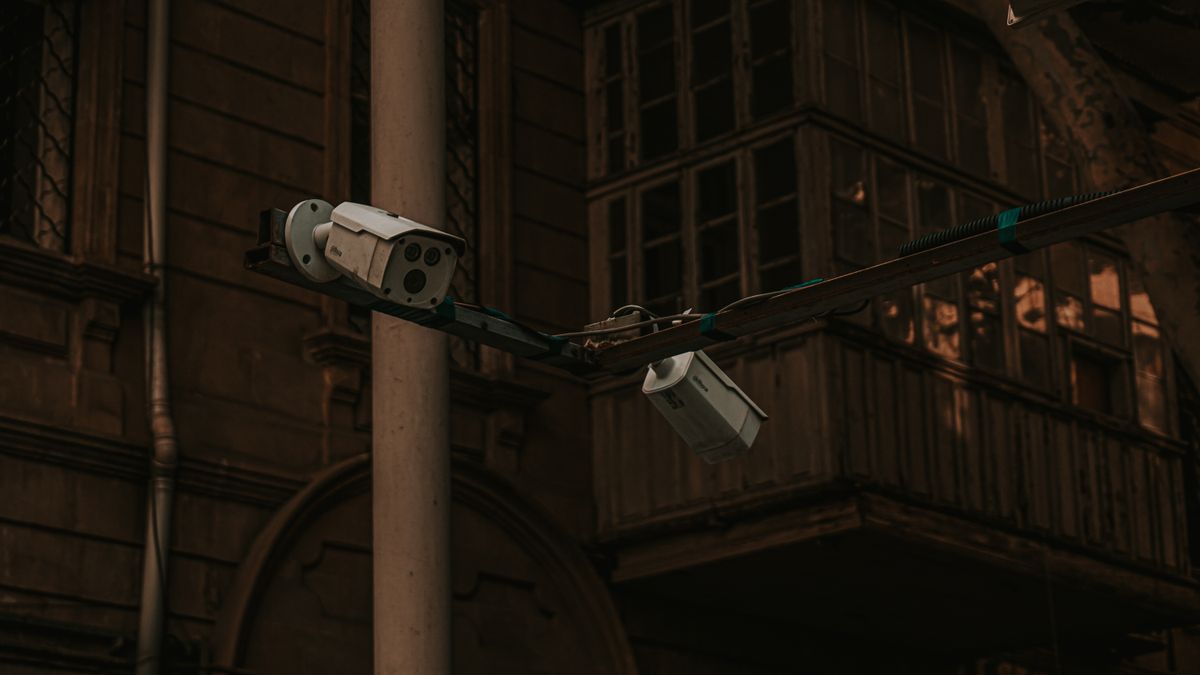
Photo by Elmir Jafarov on Pexels
Proper geometry prevents camera blinding from headlights and eliminates retroreflective washout on metallic tags. Follow these vertical and horizontal positioning limits during installation.
IR Infrared Night Vision vs. 2K Full-Color Spotlight Night Vision
| Feature / Metric | Standard Infrared (IR) Mode | 2K Full-Color Spotlight Mode |
| --- | --- | --- |
| License Plate Clarity | Overexposed / solid white glow due to retroreflective paint | Crisp character recognition at speeds under 15 mph |
| Facial Identification Distance | 10-15 ft (low contrast, shadowed eyes) | 20-30 ft (full natural skin tone and feature definition) |
| Vehicle Color & Clothing Detail | Monochrome grey/black only | True color rendering (e.g., red truck, blue jacket) |
| Headlight Glare Resistance | Poor; IR sensor easily blinded by direct high beams | Moderate to high; spotlight balances background exposure |
| Power & Battery Draw | Low (invisible IR LED array) | Slightly higher during active motion events; offset by solar panel |
Understanding how different light spectrums interact with license plate reflective coatings and facial features is critical when setting up your off-grid surveillance.
Key Takeaways: Night Visibility Rules for Off-Grid Cameras
- Spotlight mode is essential: Standard infrared (IR) vision causes license plates to bounce light back, creating a useless white box. Full-color spotlight illumination reveals physical plate numbers.
- Speed and angle dictate readability: 2K 4G solar cameras excel at entry choke points where vehicles travel under 15 mph at a 15-degree angle off headlight centerlines.
- Facial recognition reaches 20 to 30 feet: With 2K resolution and LED spotlights enabled, facial features, clothing colors, and physical markers are clearly identifiable at night.
- Zero wiring or Wi-Fi required: High-definition 2K night surveillance operates anywhere with Verizon, T-Mobile, or AT&T cellular coverage, backed by solar battery topping.
Recommended Off-Grid Solution: Solar Watch Cam 2K
For off-grid sites needing dependable night monitoring without power drops or network drops, the Solar Watch Cam provides complete 2K visual coverage.
Night Plate & Facial Capture Setup Checklist
- Position camera 8 to 10 feet above ground to avoid vandalism while maintaining a tight vertical capture angle.
- Angle camera 15 degrees off the center line of oncoming vehicle headlights to eliminate direct beam blindness.
- Set motion lighting mode to Full-Color LED Spotlight (disable black-and-white IR mode for plate capture zones).
- Configure target capture zone within 15 to 25 feet of the camera lens for optimal pixel density.
- Ensure vehicle speed in target zone is reduced under 15 mph (install speed bump or gate prompt if necessary).
- Set video recording resolution to 2K (3MP) in the mobile app.
- Verify cellular signal strength (Verizon, T-Mobile, or AT&T) shows at least 3 bars for crisp live streaming.
4 Critical Mistakes That Ruin Night Video Clarity
Photo by ᛟᛞᚨᛚᚹ ᚨᚱᚲᛟᚾᛊᚲᛁ on Pexels
Avoid these common setup errors that lead to overexposed, blurry, or missing footage when trespassers enter your property after dark.
Frequently Asked Questions: Night Plate & Face Recognition
What is the maximum distance the Solar Watch Cam can capture clear facial details at night?
With 2K HD resolution (3MP) and motion-activated full-color LED spotlights enabled, clear facial identification occurs reliably within 20 to 30 feet in total darkness. Beyond 30 feet, general body shape, clothing color, and height remain visible, but fine facial features require closer proximity.
How does vehicle speed affect license plate readability on 4G security cameras?
Standard 15–30 FPS battery-powered cellular security cameras utilize auto-shutter algorithms to balance low-light exposure with battery conservation. Vehicles moving over 15–20 mph at night experience motion blur across license plate characters. To ensure plate legibility, position your camera at choke points like gates, speed bumps, or driveway turns where vehicles naturally slow down.
Why do license plates look like bright white glowing rectangles on infrared night vision?
US state license plates are coated with retroreflective sheeting engineered to bounce light directly back to its source (like car headlights). When standard infrared (IR) LEDs emit light straight from the camera housing, the retroreflective material reflects that IR energy at full intensity back into the camera lens, blowing out the exposure into a featureless white box. Switching to full-color spotlight mode eliminates this washout by casting natural white illumination across the surface.
Can the spotlight turn on automatically when motion is detected at night?
Yes. Smart AI motion detection evaluates thermal and movement signatures, automatically triggering the built-in LED spotlight the instant a person or vehicle enters the detection zone. This instantly converts the video feed from dark ambient monitoring to full-color 2K HD recording while providing a strong visual deterrent to trespassers.
Does full-color night mode use significantly more battery than standard black-and-white IR?
While bright white LED spotlights draw slightly more power during active motion events than invisible IR LEDs, the high-efficiency solar panel continuously recharges the internal battery pack during daylight hours. Because spotlights only activate when AI detects relevant activity (rather than running continuously), power consumption remains fully sustainable year-round—even during overcast winter days.
Detailed answers to common technical questions regarding shutter speeds, battery drain, range limits, and lighting modes.
Next Steps for Securing Your Property
Your decision: Determine whether your off-grid security objective is capturing vehicle plates at slow driveway choke points or monitoring general perimeter motion.
Do this next: Mount your 2K 4G solar camera 8–10 feet high, angled 15 degrees off-center from approaching vehicle headlights, and enable motion-activated LED spotlights for full-color night capture.
Related resource: Solar Watch Cam 2K Visual Performance & Mounting Guidelines
Solar Watch Cam (Pack) - 4G LTE Off-Grid Camera with 2K HD & Full-Color Night Vision.
Take these actions to optimize your off-grid surveillance layout and protect your acreage, job site, or remote facility.