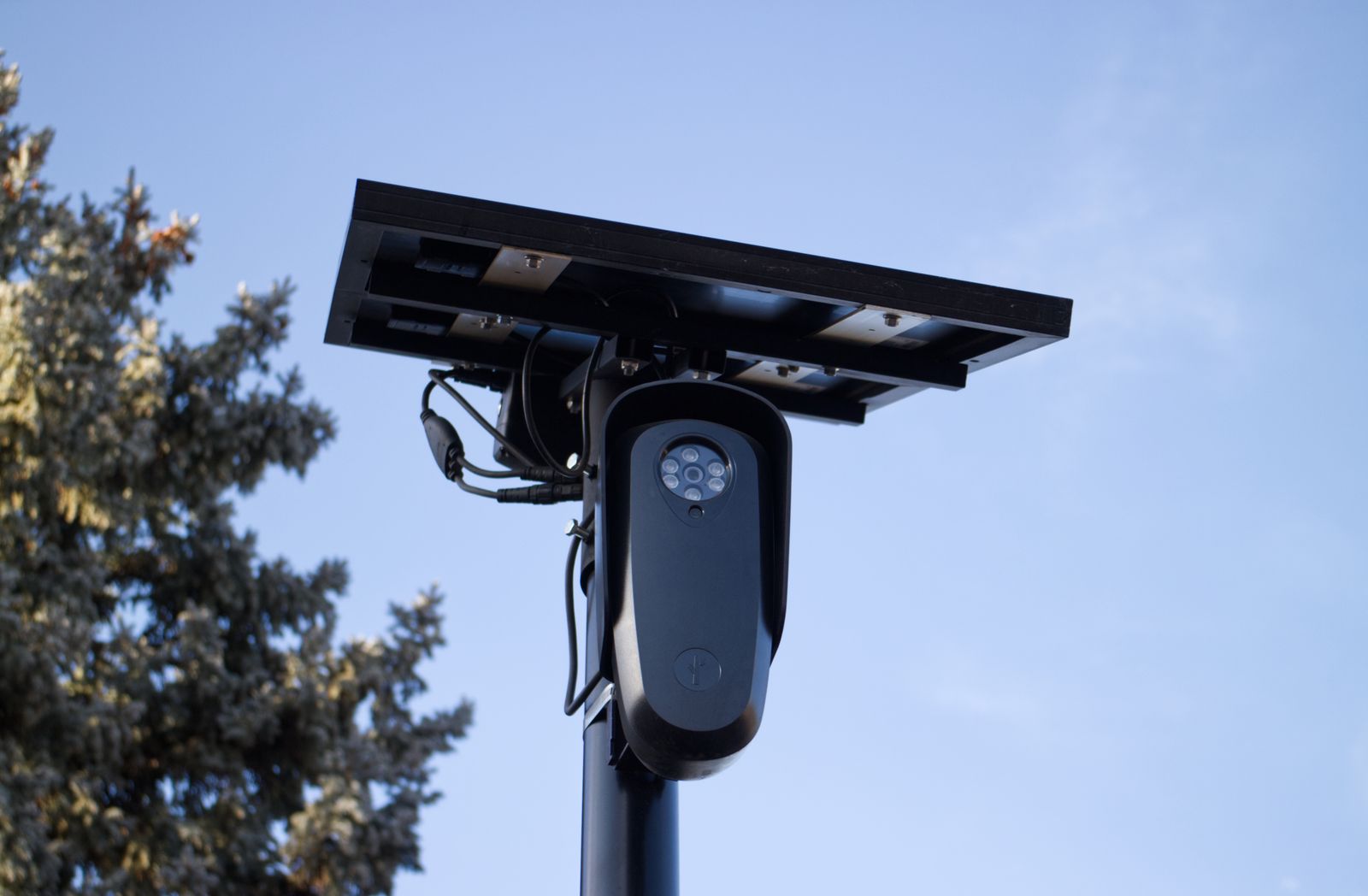
4G Cellular Boosters vs. Multi-Carrier Solar Cameras: Best Solution for Weak Signal Areas
Should you spend $300–$600 on an active cellular signal booster or switch to a multi-carrier 4G solar security camera? Unless your site has zero cellular signal across every major network, an active signal booster is a poor choice for off-grid solar setups due to severe 15W–30W continuous power drain that rapidly kills camera batteries. A multi-carrier 4G solar camera like the Solar Watch Cam automatically connects to the strongest signal between Verizon, AT&T, and T-Mobile, providing reliable 2K video streaming even on a 1-bar connection with zero extra battery consumption.
Scenario Breakdown: Cellular Booster vs. Multi-Carrier Auto-Switching
| Scenario / Site Conditions | Active Cellular Booster + Single-Carrier Cam | Multi-Carrier Solar Camera (Solar Watch Cam) | Winner & Key Failure Mode |
| --- | --- | --- | --- |
| 1-Bar Verizon, 3-Bar AT&T (Fluctuating Coverage) | Amplifies weak 1-bar Verizon signal. High power draw; loses connection if Verizon tower drops. | Auto-switches to AT&T's 3-bar signal out of the box with zero user configuration. | Multi-Carrier Win. Failure Mode: Single-carrier locks you to a weak tower. |
| Off-Grid Winter Operation (Limited Peak Sun) | Booster consumes 15W–30W continuously (360Wh–720Wh/day), draining solar batteries overnight. | Integrated IoT module consumes <0.5W average, running continuously on a compact panel. | Multi-Carrier Win. Failure Mode: Booster causes complete battery shutdown in rain/snow. |
| Remote Job Site / Temporary Setup (10-Min Mount) | Requires Yagi antenna mounting, coax cable routing, amplifier weatherproofing, and power wiring. | All-in-one mount. Solar panel and multi-carrier SIM are built-in. Deploys in under 10 minutes. | Multi-Carrier Win. Failure Mode: Coaxial cable water ingress and complex installation. |
| True Dead Zone (0 Bars Across All 3 Carriers at Height) | Can fetch usable signal if high Yagi antenna reaches a distant cell tower 10+ miles away. | Cannot connect if no carrier signal reaches the hardware location. | Booster Win (Edge Case). Requires dedicated 100W+ solar array and deep-cycle battery bank. |
Compare how an active cell booster paired with a single-carrier camera performs against a native multi-carrier 4G solar camera across real-world off-grid property scenarios.
Pros and Cons: Cellular Repeaters vs. Multi-Carrier Native Connectivity
Photo by Jan van der Wolf on Pexels
Pros
- Multi-carrier cameras eliminate $300–$600 in extra hardware costs.
- Multi-carrier SIMs automatically switch between Verizon, AT&T, and T-Mobile based on localized signal strength.
- Zero additional power draw preserves camera battery life during extended cloudy periods.
- High-gain passive antennas can be added directly to SMA ports without active electrical boosters.
- Active signal boosters require dedicated 15W–30W continuous power sources, making them incompatible with small 3W–6W camera solar panels.
- Single-carrier cameras bound to signal boosters lack tower redundancy if the local carrier experiences an outage.
- Booster installations introduce multiple failure points including coaxial cable weather degradation and amplifier heat buildup.
- In complete cellular dead zones (0 bars across all networks), multi-carrier cameras require a high-gain passive Yagi extension pole.
Our Recommendation for Remote Properties
For 95% of remote properties—including US ranches, rural farm homes, job sites, and vacation cabins—spending money on an active cellular signal booster is unnecessary and counterproductive. Instead, deploy a self-contained multi-carrier system.
The Solar Watch Cam is built specifically for off-grid environments where Wi-Fi does not exist. It auto-connects to the strongest tower across Verizon, T-Mobile, or AT&T out of the box. Featuring 2K HD resolution, full-color night vision, smart AI motion detection, two-way audio, and an IP65 weatherproof rating (-4°F to 122°F), it delivers total protection without electrical maintenance or complex wiring.
Top Off-Grid Signal Setup Mistakes That Kill Camera Battery Life
Avoid these critical engineering and installation errors when securing remote land with cellular cameras.
Weak Signal Decision Flowchart: 1-Bar and Fringe Signal Troubleshooting
- Do you have at least 1 bar of service on Verizon, AT&T, or T-Mobile at ground level? → Yes: Deploy a Native Multi-Carrier Solar Camera (Solar Watch Cam). No booster needed.. No: Check signal at 12–15 feet elevation using a extension pole or ladder.
- Is signal detected (1+ bar) at 12–15 feet elevation? → Yes: Deploy Multi-Carrier Solar Camera elevated on a pole with a passive high-gain antenna.. No: Site is a complete cellular dead zone. Requires dedicated 100W+ solar array + active booster.
Key Takeaways: Optimizing 4G LTE Signal Off-Grid
- Active signal boosters consume 15W–30W continuously, making them power-incompatible with standard camera solar panels.
- Multi-carrier 4G LTE cameras auto-select the strongest network (Verizon, AT&T, T-Mobile), giving you native carrier redundancy.
- 2K HD video streaming requires only 1.5 to 2.0 Mbps, meaning 1-bar of cellular coverage is fully sufficient for live view and alert upload.
- Passive high-gain antennas (Yagi or omni) add 7–11 dBi gain without consuming a single watt of solar power.
- Solar Watch Cam eliminates Wi-Fi dependencies, extension cords, and manual recharging while operating in temperatures from -4°F to 122°F.
Decision Support Framework: Match Your Property to the Right Tech
Selecting between native multi-carrier auto-switching and external amplification depends primarily on power budget constraints and carrier presence.
Best choice for
- Solar Watch Cam (Multi-Carrier Pack) — Provides instant auto-switching between major US networks with zero electrical maintenance or external wiring.
- Solar Watch Cam + Passive External SMA Antenna — Boosts signal reception by 7–11 dBi without drawing any current from the internal solar battery array.
- Avoid active electronic cellular boosters on standalone solar cameras unless you have a dedicated 100W+ solar panel and deep-cycle marine battery.
- High-Gain Passive Directional Yagi Antenna — Connects directly to camera antenna ports for fringe areas, adding dBi gain without electrical draw.
Featured Solution: Solar Watch Cam (Multi-Carrier 4G)
Photo by Xayriddin Baxromxo'jayev on Pexels
The definitive off-grid security solution designed specifically for American landowners, contractors, and remote property owners.
Real-World Field Scenarios: Ranches, Cabins, and Job Sites
Texas Cattle Ranch with Patchy Verizon Coverage — Single-carrier Verizon cameras constantly freeze or drop offline. Mounting the Solar Watch Cam allows the system to auto-switch to T-Mobile's mid-band network, maintaining smooth 2K live streaming along pasture fences.
Montana Mountain Cabin in Heavy Winter Snow — Active boosters fail in sub-zero weather when sun hours drop to 4 hours per day. Solar Watch Cam's low-power IoT chipset runs reliably through winter storms down to -4°F without killing the battery.
Florida Commercial Construction Site without Utility Power — Subcontractors need quick deployment without electrician permits. Solar Watch Cam mounts to fence posts in 10 minutes, giving foremen live 360-degree views and two-way audio to direct delivery drivers.
How multi-carrier technology solves real-world off-grid security challenges across the United States.
When property owners encounter weak cell phone coverage on remote land, the instinctive reaction is to shop for a cellular signal booster (also known as an active repeater). While signal boosters serve a vital purpose inside residential homes connected to grid electricity, applying them to off-grid solar security cameras creates severe engineering conflicts.
The Math Behind Off-Grid Power Budgets
An active 4G LTE signal booster consists of an exterior antenna, an electronic amplifier base unit, and an interior broadcast antenna. This electronic amplifier requires continuous AC or DC power, typically drawing between 15 Watts and 30 Watts. Over a 24-hour cycle, an active booster consumes 360 Watt-hours to 720 Watt-hours of energy.In contrast, a purpose-built cellular solar camera like the Solar Watch Cam utilizes an ultra-low-power IoT (Internet of Things) modem that sleeps during inactive periods and draws less than 0.5 Watts during normal monitoring. Its compact, high-efficiency solar panel easily recovers daily battery consumption even under overcast skies.
If you connect an active signal booster to a camera's small solar system, the 30W booster will exhaust the battery within hours after sunset, leaving your property completely unmonitored overnight. Powering an active booster off-grid safely requires an auxiliary power station consisting of a 100W–200W solar array, a solar charge controller, and a heavy deep-cycle AGM or Lithium battery—adding $500 to $1,000 in unexpected equipment costs.
Why Carrier Redundancy Beats Signal Amplification
Cellular coverage at rural boundaries is rarely uniform. A property might register 1 bar of Verizon signal because of an intervening ridge, while an AT&T or T-Mobile tower three miles away projects a crisp 3-bar signal across the acreage.Standard single-carrier security cameras lock you into a single cellular provider. If that carrier's signal dips or tower maintenance occurs, the camera drops offline. Multi-carrier cameras solve this fundamentally by integrating multi-network SIM technology. Upon powering up, the camera scans the RF spectrum and automatically registers on whichever network offers the highest Reference Signal Received Power (RSRP).
Bandwidth Requirements: Smartphones vs. 2K IoT Cameras
Smartphones demand high bandwidth (20+ Mbps) to stream high-frame-rate 4K video, load media-heavy apps, and run background tasks. When your phone displays '1 Bar', it often struggles because voice and high-throughput data channels are congested.Cellular security cameras stream compressed 2K H.265 video feeds that require only 1.5 to 2.0 Mbps of uplink bandwidth. A 1-bar 4G connection easily supplies this data rate. Therefore, even if your smartphone feels sluggish on site, a multi-carrier 4G camera will stream crisp 2K video, upload real-time motion alerts, and support two-way audio talk-down without hesitation.
Frequently Asked Questions About Cellular Signal Boosters & Solar Cameras
Clear technical answers to common off-grid connectivity and hardware questions.
Take Action: Secure Your Off-Grid Property Today
Your decision: Choose the Solar Watch Cam multi-carrier system if your property receives at least 1 bar of coverage from Verizon, AT&T, or T-Mobile.
Do this next: Order the Solar Watch Cam Pack, activate the 7-day free data trial, and let the integrated multi-carrier SIM automatically pair with the strongest network on site.
- Read next: 4G Solar Camera Antenna Placement Guide: Maximizing Signal on Remote Properties
- Read next: Cellular Security Camera Connectivity FAQ: Dead Zones, Carriers, and Placement
Solar Watch Cam Pack (https://solarwatchcam.com)
Ready to protect your property without complex wiring, electricity bills, or expensive booster hardware?