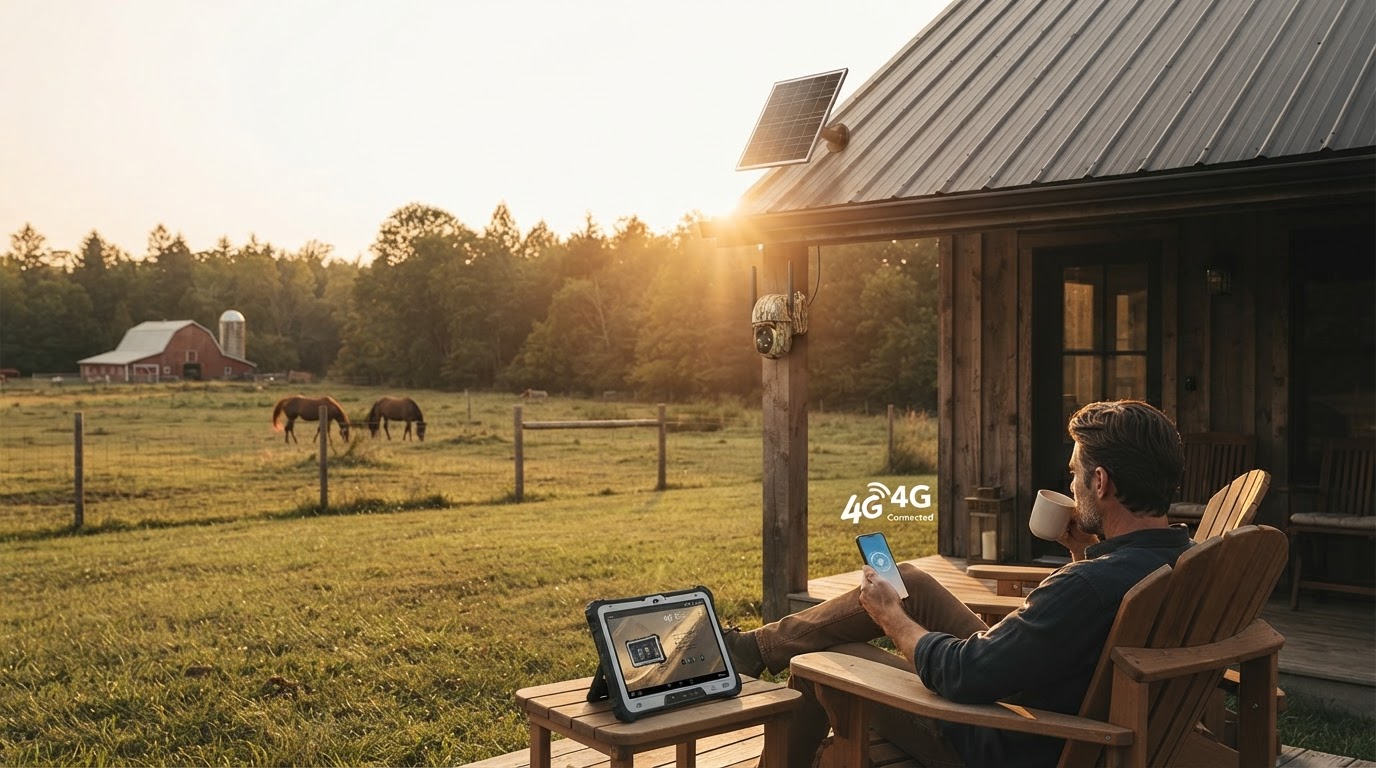
Solar Watch Cam Tackles Rural Signal Reliability Issues
 Sam VasquezBuying Guide Lead
August 8, 2026 — Remote property owners are increasingly moving away from traditional WiFi-dependent security systems in favor of standalone cellular hardware. Recent field tests indicate that 4G LTE cameras provide a more consistent connection for sites like ranches and job sites where standard routers fail to reach.
Reliability is the biggest hurdle for rural security. According to Vosker, LTE cellular security cameras are a reliable and secure choice for surveillance in locations where a Wi-Fi connection is not available or is too weak. If you are dealing with a barn or a vacation home miles from the nearest fiber line, a WiFi camera is just a paperweight. Between these two, I’d go with a dedicated cellular unit like the Solar Watch Cam. It bypasses the router entirely by connecting to Verizon, T-Mobile, or AT&T networks directly.
Photo by Raw Art Shafak on Pexels
If you're on a budget, you might be tempted by a cheaper WiFi camera and a range extender. Don't do it. Security.org reports that cellular-enabled options are, in some cases, even more dependable than their Wi-Fi counterparts because they aren't susceptible to local power outages or router resets. The Solar Watch Cam includes a 2K HD feed and full-color night vision, which is a significant step up from the grainy infrared footage found on entry-level models.
Expert tip: When installing a cellular camera on a large property, check the signal strength at the exact mounting height before drilling. Signal at ground level can differ significantly from signal ten feet up a pole or tree.
For those managing complex sites, understanding Solar Watch Cam battery performance expectations is critical for long-term maintenance. If you are securing remote property with Solar Watch Cam systems, you need to account for data usage. While the Solar Watch Cam offers a 7-day free trial, you will eventually need a paid data plan. This is the trade-off for a camera that works anywhere.
Here’s what I’d actually buy: If you have a remote cabin, I'd skip the Arlo Go and get the Solar Watch Cam for its integrated solar panel and 360-degree view. It simplifies the setup for how to secure a remote cabin without internet. Skip this if you already have high-speed, reliable WiFi covering every inch of your property; in that case, a hardwired PoE system is usually better. However, for the off-grid property market, cellular is the only logical path forward.