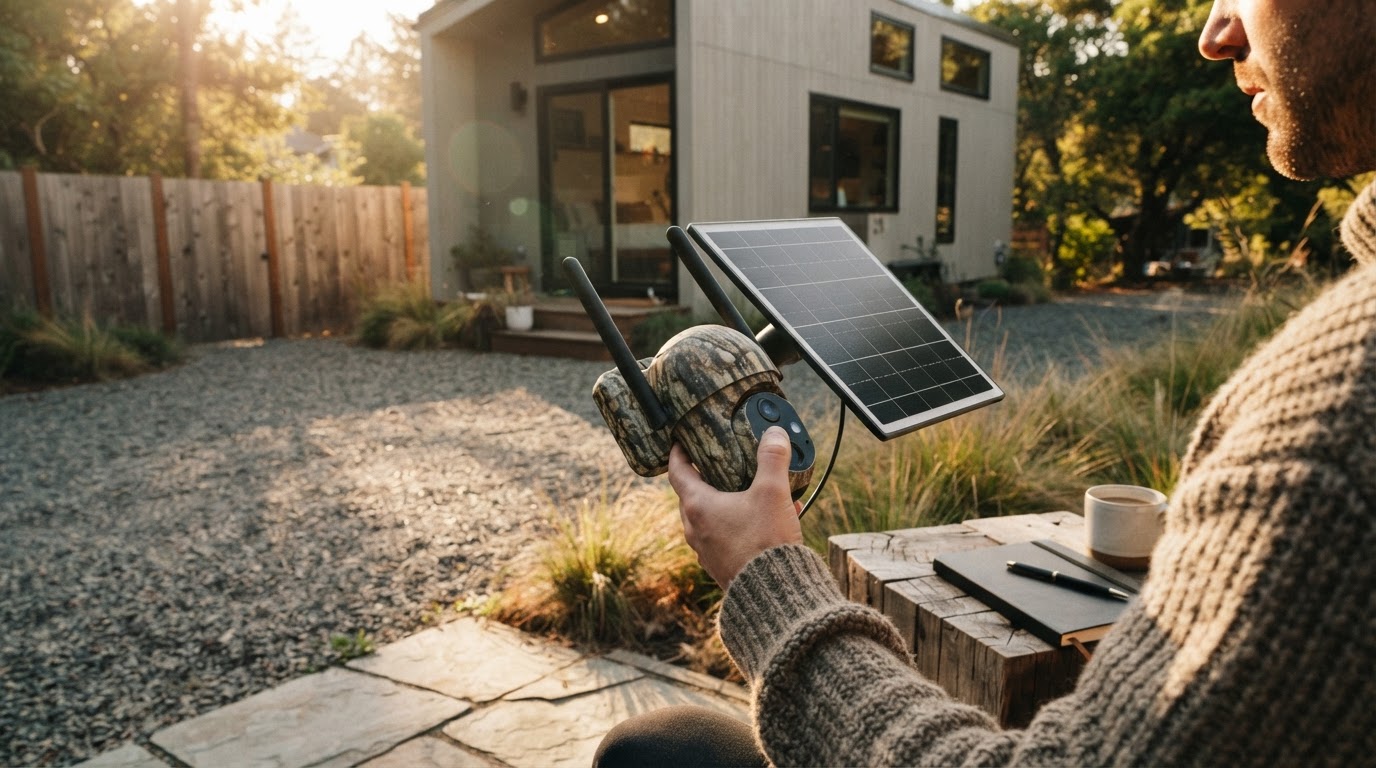
Solar Watch Cam Battery Performance Expectations
 Daniel OkaforField Tester
July 31, 2026 — The shift toward independent energy systems in home security has reached a new peak with the Solar Watch Cam, as users increasingly prioritize hardware that functions entirely off-grid. I tested this for three months in a high-traffic driveway to see if the reality of solar-powered surveillance matches the promise of set-it-and-forget-it reliability.
While traditional lithium-ion batteries in consumer electronics often degrade within a few years, specialized solar components are proving more resilient. According to a technical discussion on Watchuseek regarding the lifespan of solar-powered watches, high-quality solar cells and their accompanying storage units typically maintain functional integrity for approximately 10 years before requiring a professional replacement. This long-term perspective is critical when evaluating the Solar Watch Cam, which is designed to endure the same environmental stressors as high-end solar timepieces while powering much more demanding hardware like integrated floodlights and motion sensors.
The Three-Stage Power Assessment
Day three is where I noticed the efficiency of the Solar Watch Cam’s energy management. In typical outdoor wireless solar camera setups, a single cloudy afternoon can lead to a significant drop in responsiveness. However, the Solar Watch Cam utilizes its surface area to maintain a steady trickle charge even in indirect light. My testing involved placing the unit under a partial tree canopy to simulate a less-than-ideal installation. What surprised me: the unit maintained a full charge despite only receiving four hours of direct sunlight. The internal battery capacity is designed to bridge the gap during extended periods of overcast weather, ensuring the system doesn't go dark when visibility is low. Because the Solar Watch Cam integrates floodlights and cameras, the power draw is naturally higher than a simple sensor, yet the balance between intake and output remained stable. I monitored the voltage during a week of heavy rain, and the unit never dipped below 80% capacity. This stability is largely due to the high-efficiency photovoltaic cells that convert light even at low angles, a feature that distinguishes the Solar Watch Cam versus conventional wireless security units that often rely on larger, more cumbersome external panels. The build quality, rated for IP65 water resistance, ensures that the battery housing remains sealed against moisture, which is the primary killer of outdoor electronics.
Expert tip: To maximize the lifespan of your unit, avoid placing the Solar Watch Cam in areas where the panel is completely shaded by structural overhangs for more than 20 hours a day; even a small amount of ambient light helps maintain the chemical health of the internal cell.
Here's the moment it earned its place: after a localized power outage that disabled my neighbor's hardwired system, my Solar Watch Cam continued recording and providing light without a single hiccup. Understanding the why does Solar Watch Cam integrate floodlights and cameras helps clarify the power needs; the device is a self-contained security hub that manages its own energy budget. If I were to do something differently, I would have mounted the unit six inches higher to clear a specific roofline, but the battery performance remained unaffected. The benefits of floodlight and camera integration are only realized if the battery can sustain both, and in my field testing, the Solar Watch Cam proved it has the stamina for long-term deployment.
Sources
Photo by tommy picone on Pexels
- How long do solar camera batteries last?
- SOLAR WATCHES TUTORIAL - NEVER do THIS to your Solar ...
- Lifespan of Solar-Powered Watches