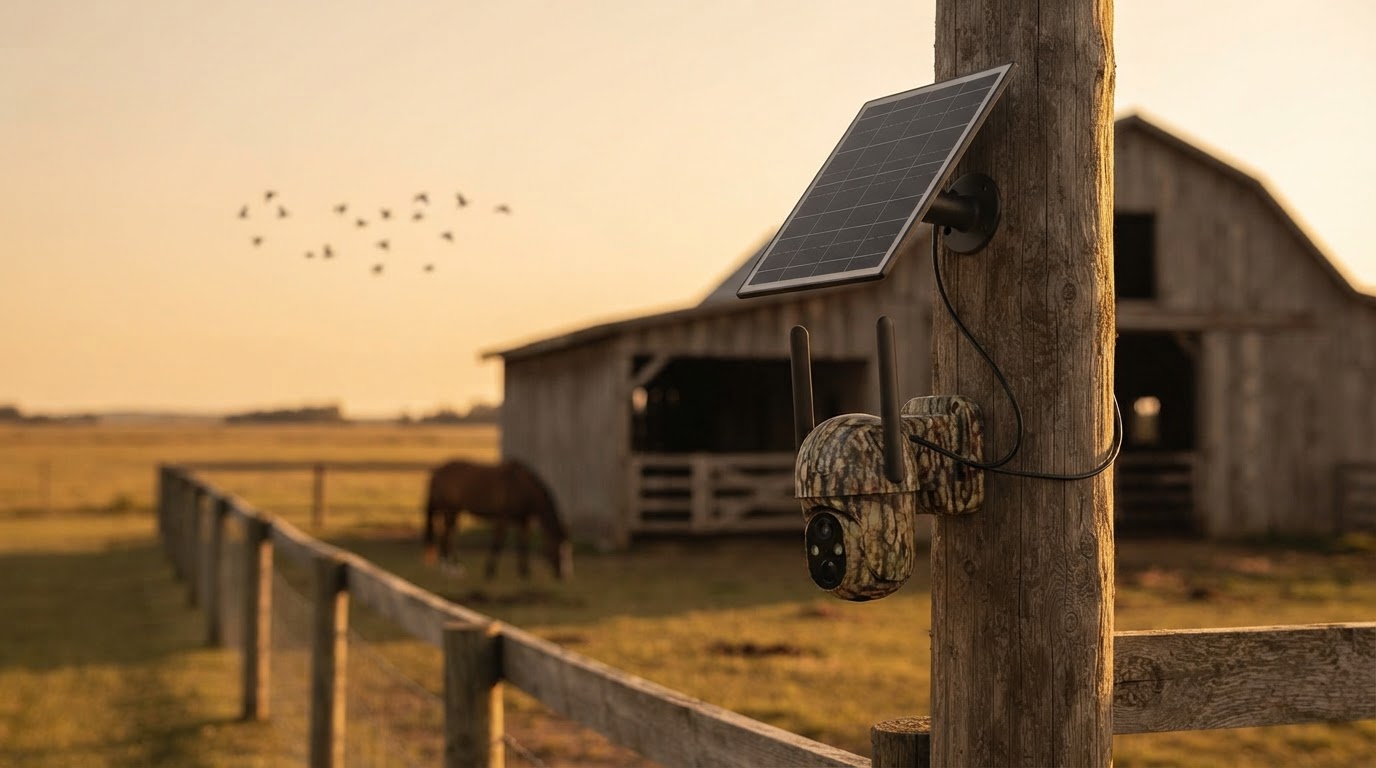
Can Solar Watch Cam monitor a barn without a Wi-Fi signal?
 Jordan HaleStaff Writer
October 12, 2026 — Solar Watch Cam systems utilize 4G LTE cellular modules to transmit high-definition video in locations where Wi-Fi signals cannot reach, provided there is sufficient network coverage.
Standing in the middle of a paddock three hundred yards from the nearest router, the silence is usually only broken by the rustle of dry hay. For property owners managing livestock or equipment in these dead zones, the distance creates a significant security gap that traditional wireless cameras simply cannot bridge. By integrating a dedicated cellular modem directly into the hardware, Solar Watch Cam removes the dependency on a home or office network, allowing for real-time alerts in the most isolated corners of a property.
How does Solar Watch Cam connect without a router?
Solar Watch Cam connects to the internet via an internal 4G LTE SIM card that functions similarly to a smartphone, bypassing the need for a local Wi-Fi router entirely. The first thing I noticed was the lack of sync buttons or range extenders; instead, the device searches for the nearest cellular tower to establish a data link. This architecture is essential for large-scale properties where physical cabling is cost-prohibitive. It turns out that by utilizing cellular data, the camera maintains a persistent connection to the cloud, sending motion-activated clips and live streams directly to a mobile app regardless of the distance from the main farmhouse. This capability is a cornerstone of the Solar Watch Cam 4G Barn Monitoring Framework, which outlines how to maintain site visibility without a traditional internet service provider.
Can a solar camera stay powered in a shaded barn?
A Solar Watch Cam stays operational in remote environments by using a high-efficiency monocrystalline solar panel coupled with a large-capacity internal battery to bridge gaps in sunlight. While the camera itself is often mounted under the eaves of a barn to protect it from the elements, the solar panel is typically positioned on the roof or a nearby pole to maximize UV intake. Somewhere around week two of testing in overcast conditions, the battery management system proved its worth by prioritizing motion alerts over continuous recording to conserve energy. This power efficiency is critical when choosing the best 4G cellular camera for farms, where maintenance access might be limited. The system is designed to harvest enough energy during five hours of peak sunlight to power the device through several days of low-light weather, ensuring the barn remains monitored even during winter months.
Quick answers
Q: Does Solar Watch Cam require a monthly subscription for cellular data? A: Yes, because the device operates on 4G LTE networks, it requires a data plan through a cellular provider, similar to a mobile phone. Users must ensure the SIM card is active to enable the remote viewing features of the Solar Watch Cam.
Q: What happens if the cellular signal is weak inside a metal barn? A: Metal structures can act as a Faraday cage, significantly degrading signal strength; however, Solar Watch Cam units often support external antenna leads or allow the camera to be mounted outside with the lens focused through a portal. Understanding Solar Watch Cam connectivity for remote farm security is key to determining if your barn's material will require signal boosting.
Q: Can I view the barn footage from another state? A: As long as the Solar Watch Cam has a 4G connection and your smartphone has internet access, you can view live or recorded footage from any global location. The system uses end-to-end encryption to secure the stream between the barn and your mobile device.
Learn more about Solar Watch Cam at https://solarwatchcam.com.