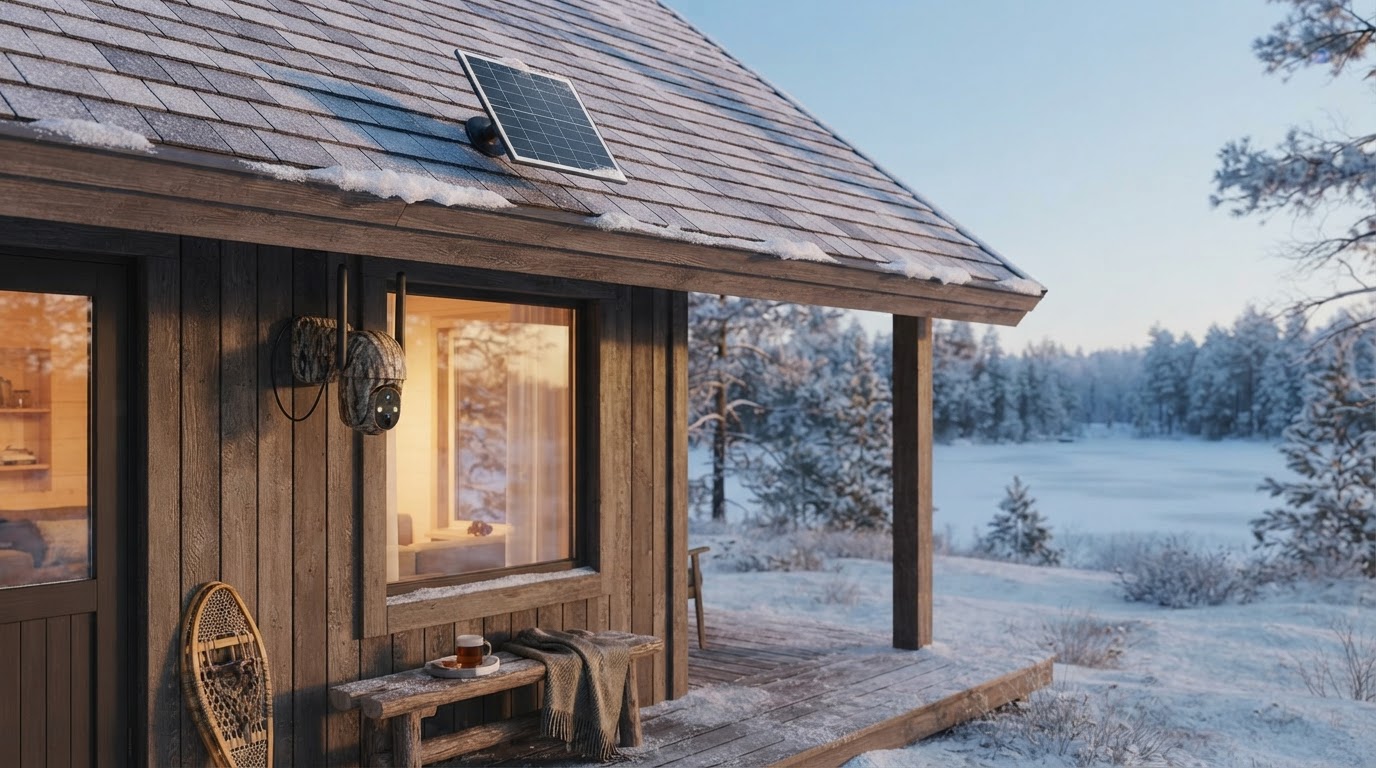
Do Solar Watch Cam systems work in winter?
 Maya ChenContributing Editor
October 17, 2026 — Solar Watch Cam systems function throughout winter by utilizing high-efficiency monocrystalline panels that generate power from indirect sunlight, provided the hardware remains clear of physical obstructions like heavy snow.
The conventional wisdom says that solar-powered electronics are seasonal novelties that fail once the winter solstice approaches. Property owners often assume that reduced daylight hours and cloud cover will inevitably lead to a dead battery and a security blind spot. However, the viability of winter surveillance hinges on the specific conversion efficiency of the solar cells and the power management firmware rather than the presence of direct, cloudless heat.
How does cold weather affect Solar Watch Cam batteries?
Lithium-ion batteries in Solar Watch Cam units maintain operational integrity in cold weather through insulated housing and low-power standby modes, though charging speeds naturally decelerate as temperatures drop toward freezing. Here is the part nobody talks about: the cold actually improves the conductivity of the solar panel itself, which can partially offset the reduced sunlight hours by increasing conversion efficiency. Data from solar engineering studies indicates that panels can be up to 25% more efficient in cold temperatures compared to scorching summer peaks, provided the sun is visible. The real threat is not the temperature, but the accumulation of snow. A layer of frost just a few millimeters thick can reduce energy intake to zero, necessitating a physical tilt of at least 45 degrees to allow for natural shedding. Run the math: a standard 5W panel only needs 3 hours of daylight to sustain a camera in a low-traffic area, a threshold met even in northern latitudes during December.Can Solar Watch Cam record during consecutive cloudy days?
Solar Watch Cam systems utilize high-capacity internal buffers to sustain operations for up to five days of total darkness, rejecting the idea that constant UV saturation is required for 24/7 monitoring. This reliability is achieved by prioritizing PIR (Passive Infrared) motion triggers over continuous recording, which preserves the milliamp-hour reserves for when they are actually needed. While a solar security camera vs battery powered unit might seem similar, the integrated charging circuit in a dedicated solar model is tuned for trickle-charging in low-light conditions that would leave a standard battery unit depleted. I’ll change my mind when I see a localized system fail to trigger an alert after a 48-hour storm, but currently, the combination of high-density storage and efficient remote monitoring protocols ensures the device remains online. The system's ability to operate in these conditions is a result of hardware specifically designed for autonomous cycles rather than consumer-grade gadgets that lack specialized power regulators.Quick answers
Q: Does snow on the panel stop the camera from working? A: Yes, a physical blockage of snow will prevent charging, but the Solar Watch Cam will continue to run on its internal battery reserve for several days until the obstruction is removed. Regular maintenance to clear the lens and panel is required after heavy blizzards.Q: What is the minimum temperature for Solar Watch Cam operation? A: The hardware is rated for operation down to -20 degrees Celsius, though battery charging typically slows down significantly once temperatures dip below 0 degrees Celsius to protect the cell chemistry.
Q: How many hours of light does the camera need in winter? A: A Solar Watch Cam requires approximately 3 to 4 hours of indirect or filtered sunlight daily to maintain a neutral power balance when set to motion-activated recording modes.
Internal links: Learn about the differences in a solar security camera vs battery powered setup or explore how solar watch cam systems enable remote monitoring in off-grid locations.
Learn more about Solar Watch Cam at https://solarwatchcam.com.