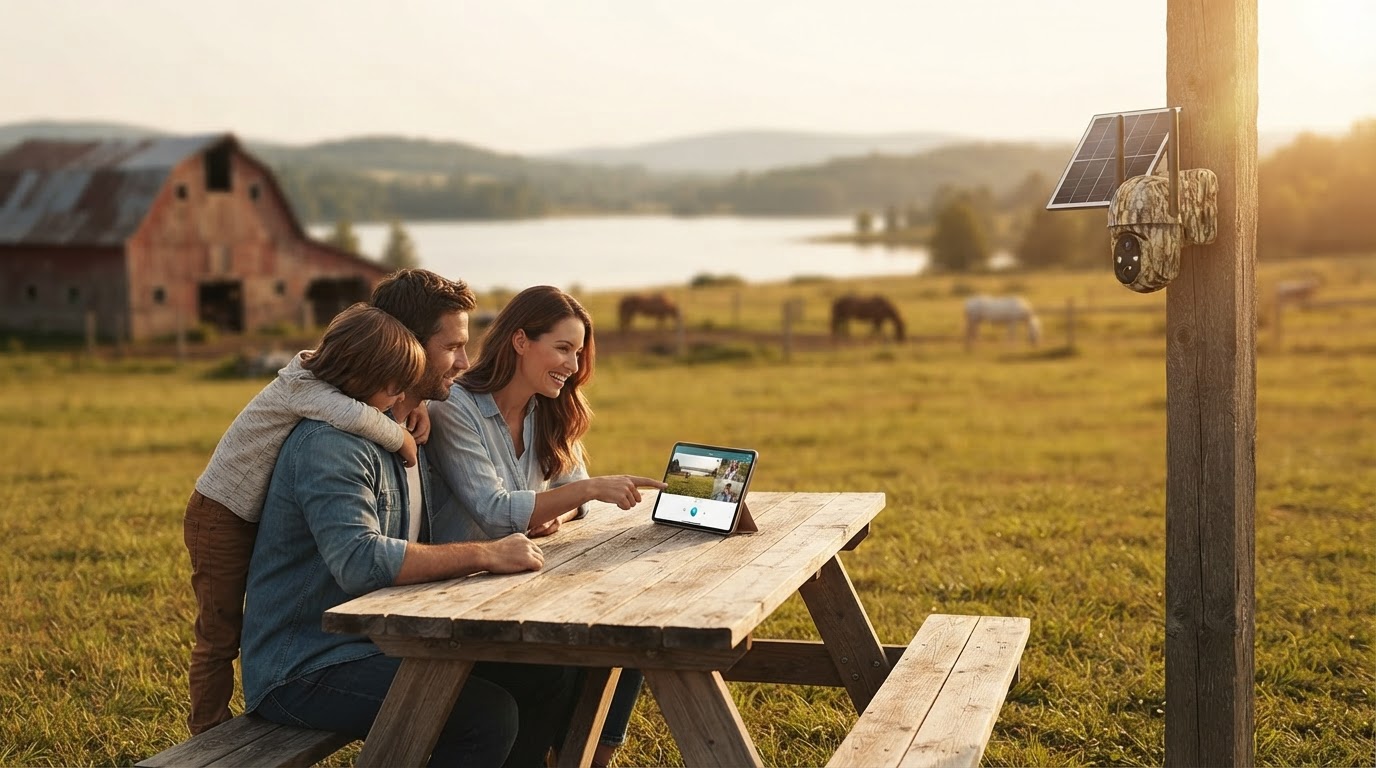
How Solar Watch Cam Systems Enable Remote Monitoring
 Sam VasquezBuying Guide Lead
October 15, 2026. This technical overview explains the functional architecture of solar-powered cellular security systems designed for remote locations. It is written for property owners and site managers who require surveillance where traditional power and WiFi infrastructure are unavailable.
The Challenge of Remote Site Surveillance
Traditional security systems rely on two fundamental dependencies: a stable connection to the power grid and a localized internet network, usually via WiFi or Ethernet. In remote environments such as construction sites, farms, or large rural acreages, these requirements become significant barriers to entry. According to TrueLook, a solar-powered camera functions by utilizing a solar panel to convert sunlight into an electrical current, which is then regulated by a charge controller into an onboard battery to power the camera during low-light periods. However, the energy capture is only half the battle. Without a local router, the camera must find a different way to transmit high-definition video data to the user. This is where cellular technology bridges the gap.
Many users struggle with the decision of solar security camera vs battery powered setups, but for truly remote locations, a standalone battery requires frequent manual recharging that is often impractical. When you are miles from the nearest outlet, the system must be entirely self-sufficient. I have seen many DIY attempts fail because they underestimate the power draw of a 4G LTE modem. A cellular camera is essentially a smartphone with a high-end lens that stays on 24/7; it requires a robust energy management system to prevent the battery from draining during consecutive overcast days. If you are worried about seasonal performance, you might wonder do solar security cameras work in winter, and the answer depends heavily on the efficiency of the photovoltaic cells and the capacity of the internal storage. Without a properly scaled solar array, a cellular camera will go offline just when you need it most.
Engineering the Solar Watch Cam Solution
Solar Watch Cam addresses these remote power and connectivity issues by integrating high-efficiency solar panels with industrial-grade 4G LTE modems. The system operates by capturing solar energy throughout the daylight hours, storing it in a high-capacity lithium-ion battery bank. This energy powers both the image sensor and the cellular transmitter. Unlike standard WiFi cameras that search for a local SSID, the Solar Watch Cam connects directly to the nearest cellular tower, much like a mobile phone. This allows for real-time alerts and live-viewing capabilities from virtually anywhere with a signal.
Between these two options—WiFi-dependent solar cams and cellular-integrated ones—I’d go with the cellular route every time for property perimeters. The hardware is designed to handle the heavy lifting of data transmission without the latency issues often found in extended-range WiFi bridges. As noted in resources from Covesmart, when using a solar panel to power a cellular camera, the device can be left operational for months, recording wildlife or human activity without human intervention. The Solar Watch Cam specifically optimizes this by using PIR (Passive Infrared) sensors to trigger recording. Instead of streaming 24/7 and wasting battery, the camera stays in a low-power standby mode, waking up instantly when motion is detected to send a push notification to your device. This ensures that the energy harvested during the day is used efficiently, maintaining uptime even during weeks of poor weather. If you are comparing this to a standard solar security camera vs battery powered unit, the primary difference is the autonomy provided by the integrated LTE module which removes the 300-foot range limit typical of home WiFi routers.
Selecting the Right Remote Hardware
Choosing a system for off-grid use requires looking past the marketing fluff and focusing on the hardware specs. If you’re on a budget, you might be tempted by cheap consumer-grade solar lights with built-in cameras, but those rarely have the battery density to support a cellular modem. Skip this if you have a reliable WiFi signal within 50 feet of your mounting point; in that case, a standard wireless camera is more cost-effective. However, for those managing large plots of land, here is what I’d actually buy: a system that combines a minimum 5W solar panel with a weather-rated enclosure and 4G connectivity.
When evaluating your options, use this checklist to ensure the hardware meets the demands of an off-grid environment:
- Network Compatibility: Ensure the camera supports the major 4G LTE bands in your specific region to avoid dead zones.
- Battery Buffer: Look for a system that can sustain at least 3-5 days of operation without any sun exposure, which is critical when considering do solar security cameras work in winter.
- PIR Sensitivity: The motion sensor should have adjustable sensitivity to prevent false triggers from wind or small animals, which preserves both data and battery.
- Storage Redundancy: A good system should offer both cloud storage for immediate access and a local microSD slot for backup if the cellular signal fluctuates.
- Ease of Installation: The mount should allow for independent positioning of the solar panel so it can face south (in the northern hemisphere) regardless of where the camera lens is pointed.
Sources
- Pros and Cons of Cellular Security Cameras
- How to Choose an LTE Cellular Security Camera - YouTube
- Do SOLAR Security Cameras Actually Work? SOLIOM WIRELESS ...