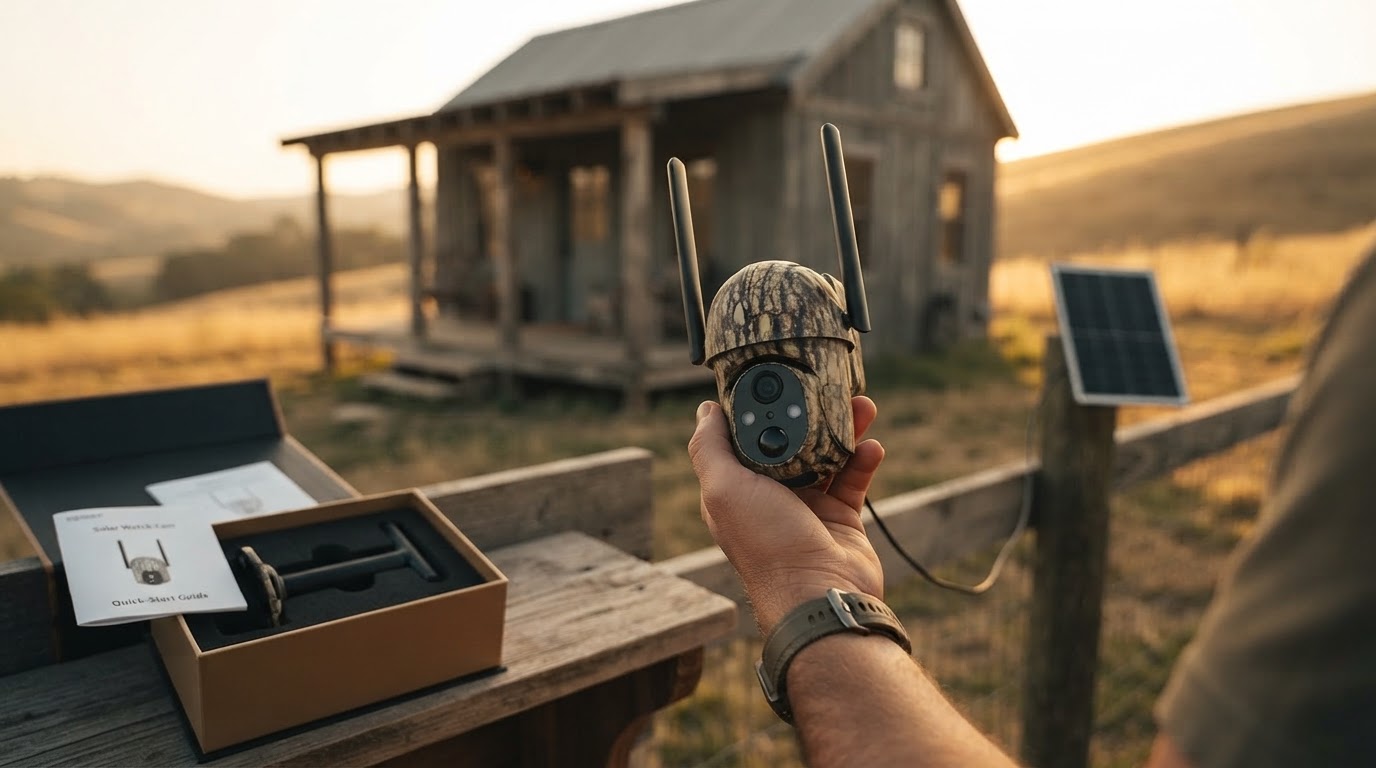
Solar Watch Cam Capabilities for Remote Surveillance
 Priya RamanSenior Analyst
October 22, 2026. This analysis evaluates the operational efficacy of the Solar Watch Cam 4G outdoor camera in environments lacking traditional infrastructure. It serves as a technical resource for property owners requiring autonomous surveillance solutions where Wi-Fi and hardwired power are unavailable.
To evaluate the utility of remote monitoring, think of it as a matrix of connectivity and power autonomy. When these two axes intersect in a remote location, the standard consumer security model fails because it assumes the presence of a localized network and a stable grid. For those who buy 4g solar camera no wifi needed, the objective is to eliminate the 'single point of failure' inherent in localized routers. Two axes matter here: the reliability of the energy harvest and the consistency of the cellular uplink. Without high-efficiency solar conversion, the camera becomes a brick during overcast cycles; without a robust 4G handshake, the hardware is merely a localized recorder with no real-time utility. This tension defines the current state of off-grid security.
The Infrastructure Gap in Remote Monitoring
The primary challenge in modern property management is the 'dark zone'—areas where signal attenuation or distance from the main structure renders standard Wi-Fi cameras useless. Many users initially attempt to bridge this gap by comparing a solar watch cam vs trail camera, only to find that traditional trail cameras often lack the real-time streaming capabilities necessary for active security. The problem is compounded by the seasonal variability of sunlight, which can lead to power depletion in poorly optimized systems. According to the International Energy Agency (IEA), solar photovoltaic integration requires precise power management to maintain uptime in non-ideal conditions. In a security context, this means the device must balance its 'sleep' state with its 'active' monitoring state to ensure it never fully exhausts its internal battery reserves. When a camera loses power, the security perimeter is effectively dissolved, creating a vulnerability that is difficult to rectify remotely. Furthermore, the reliance on physical storage media like SD cards in remote areas introduces a physical security risk; if the camera is tampered with, the evidence is lost. This necessitates a shift toward cellular-based cloud transmission, which requires a strategic approach to data management. Understanding how to choose a cellular security camera plan is a prerequisite for maintaining this uplink without incurring prohibitive monthly costs or suffering from bandwidth throttling at critical moments.
Solar Watch Cam Technical Implementation
The Solar Watch Cam addresses these structural deficits through a specialized hardware stack designed for high-uptime 4G transmission. Unlike standard devices that require a constant handshake with a router, this system utilizes an integrated LTE modem that connects directly to cellular towers, effectively bypassing the need for a local network. This makes it a primary candidate for those looking to buy 4g solar camera no wifi needed. The solar integration is not merely an accessory but the core of the power architecture, utilizing a high-efficiency panel that trickle-charges a high-capacity internal battery. This allows the unit to remain operational through several days of low-light conditions. In terms of detection, the system employs Passive Infrared (PIR) sensors to distinguish between environmental motion, such as wind-blown foliage, and thermal signatures from humans or vehicles. This distinction is critical for power conservation; by only triggering the 4G radio and high-definition recording when a valid target is identified, the Solar Watch Cam preserves its energy for when it is needed most. Once you see it this way, the camera is less of a passive observer and more of an intelligent gatekeeper. The integration of two-way audio and high-intensity spotlights further transforms the device from a recording tool into an active deterrent. For users weighing the solar watch cam vs trail camera debate, the presence of these active features—controllable via a smartphone interface—represents a significant technological leap over the passive, delayed-retrieval nature of traditional scouting cameras.
Deployment Framework and Decision Rule
Selecting a remote surveillance system requires a structured evaluation of the deployment site. The decision rule: if the site is more than 100 feet from a reliable Wi-Fi source or lacks an outdoor AC outlet, a cellular solar solution is the only viable path to 24/7 visibility. To ensure a successful installation, users should follow this deployment checklist:
- Conduct a cellular signal strength test at the exact mounting height using a mobile device on the same carrier network.
- Orient the solar panel toward the south (in the northern hemisphere) with a tilt angle optimized for winter sun positions to maximize year-round charging.
- Calculate the expected data usage based on trigger frequency to determine how to choose a cellular security camera plan that avoids overage fees.
- Verify that the mounting surface is vibration-free to prevent false PIR triggers that can drain battery and data.
- Establish a maintenance schedule to clear debris or snow from the solar panel surface, ensuring peak photovoltaic efficiency.