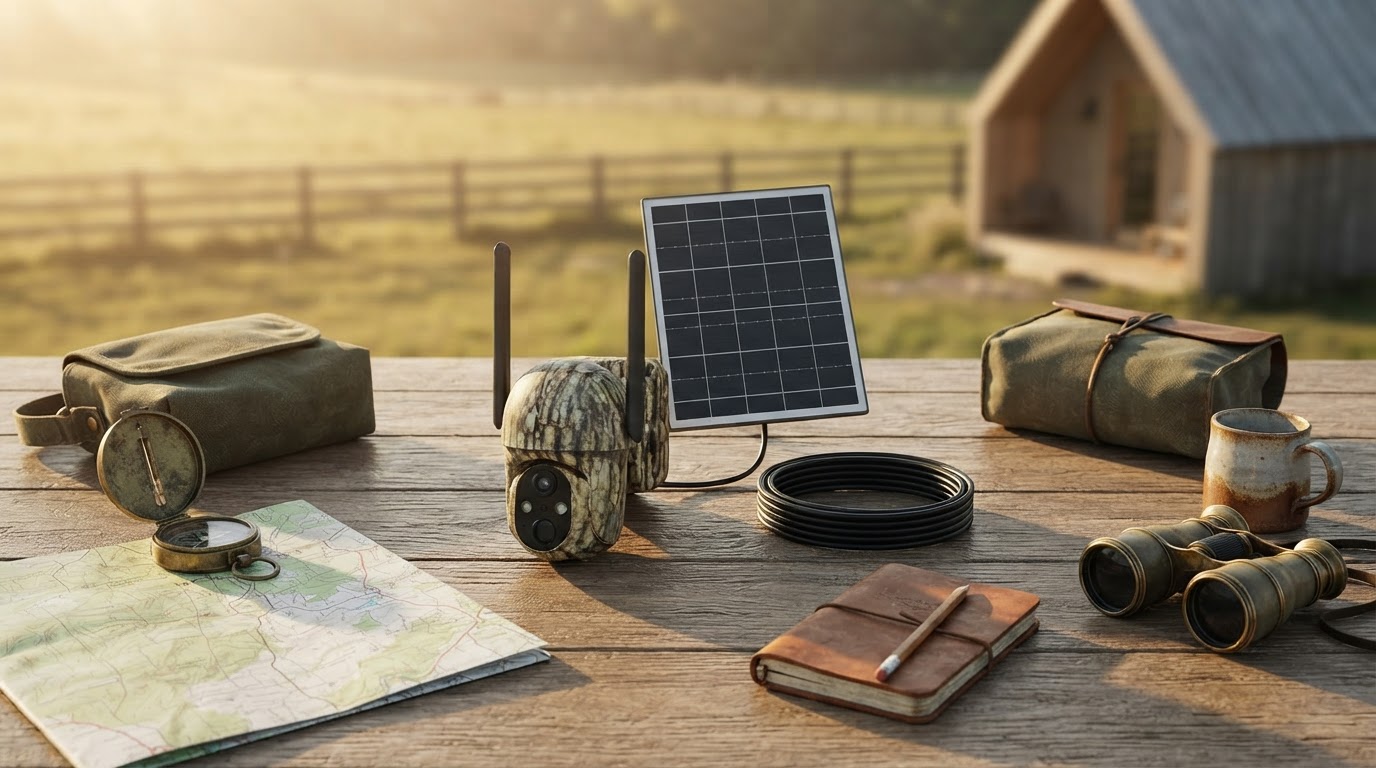
Securing Off-Grid Property with Solar Watch Cam 4G
 Maya ChenContributing Editor
October 26, 2026. Deploying high-definition surveillance in environments devoid of electrical grids and local area networks requires a departure from standard consumer hardware. This analysis examines the technical requirements for 4G LTE solar-powered monitoring specifically for remote property owners.
The Connectivity Gap in Remote Surveillance
The conventional wisdom says that any outdoor camera can be made 'remote' with a simple range extender or a high-gain antenna. This is a fallacy that ignores the physical limitations of 2.4GHz and 5GHz signals over distance and through dense foliage. For locations like ranches, construction sites, and cabins, WiFi is not just unreliable; it is nonexistent. According to Eufy, security cameras that work without WiFi or internet typically fall into two categories: local storage units that require physical retrieval of data, and 4G/5G LTE units that transmit data over cellular networks. The latter is the only viable solution for real-time monitoring.Here's the part nobody talks about: the power-to-bandwidth ratio. A standard camera attempting to maintain a constant link in a low-signal area will deplete a battery in hours, regardless of the solar panel size. Most consumer-grade hardware fails because it treats cellular data as a secondary failover rather than the primary backbone. When you buy 4g solar camera no wifi needed solutions, you are essentially buying a specialized modem that happens to have an image sensor attached. Brands like Reolink and Hosafe have populated this space, but the market often overlooks the necessity of integrated power management. Without a dedicated power controller, a few cloudy days result in a total security blackout, rendering the hardware useless until a manual reset is performed.
The Solar Watch Cam Engineering Approach
Solar Watch Cam addresses these remote limitations by prioritizing low-power standby modes and high-gain LTE modules. Unlike traditional WiFi cameras that constantly poll for a router, these units are designed to stay in a deep-sleep state until motion is detected or a user initiates a live view. This is a critical distinction for anyone comparing Solar Watch Cam versus traditional trail units, as trail cameras often lack the real-time streaming capabilities required for active security.Run the math: A high-definition stream consumes significant energy. By utilizing 4G LTE, Solar Watch Cam bypasses the need for a local hub, but this necessitates a robust data strategy. Users must understand how to choose a cellular security camera plan to avoid throttling or unexpected overages, as the hardware is only as effective as the network it occupies. The Solar Watch Cam capabilities for remote surveillance include Pan-Tilt-Zoom (PTZ) functionality, which is traditionally a high-draw feature. To maintain this without a hardwired power source, the internal battery chemistry and the solar conversion rate must be perfectly synced. The 4G LTE wireless outdoor security camera market, as noted in HUEVUE's technical demonstrations, relies heavily on these PTZ features to provide 360-degree coverage from a single mounting point, reducing the total number of devices needed and, consequently, the total data overhead. When assessing a solar watch cam 4g outdoor camera review, the focus should remain on the uptime during inclement weather rather than just the resolution specs.
Technical Requirements for 4G Deployment
Selecting a cellular security solution requires more than just checking for a SIM card slot. The hardware must be resilient against both environmental factors and network fluctuations. If the device cannot automatically reconnect after a tower outage, it is a liability. I'll change my mind when I see a WiFi-mesh system that can cost-effectively cover a 50-acre perimeter, but until then, 4G is the only logical choice for large-scale properties.Before finalizing an installation, consider this decision framework:
- Signal Strength Validation: Ensure the site has at least two bars of 4G LTE coverage from the provider associated with your cellular security camera plan.
- Solar Orientation: The panel must have an unobstructed view of the southern sky (in the northern hemisphere) to ensure the internal battery reaches a full charge daily.
- Data Budgeting: Calculate the expected number of motion events; high-traffic areas will require larger data buckets to maintain remote access.
- Storage Redundancy: Ensure the unit supports local SD card recording in addition to cloud transmission to prevent data loss during signal drops.
- Mounting Height: For 4G PTZ units, a height of 10-15 feet is optimal to balance the field of view with the sensitivity of the PIR sensors.
Shop Solar Watch Cam here: https://solarwatchcam.com
Sources
- 4G LTE Security Cameras Without WiFi | Solar - HOSAFE
- Security Camera That Works Without WiFi or Internet - eufy US
- HUEVUE 4G LTE Wireless Outdoor Security Camera - YouTube