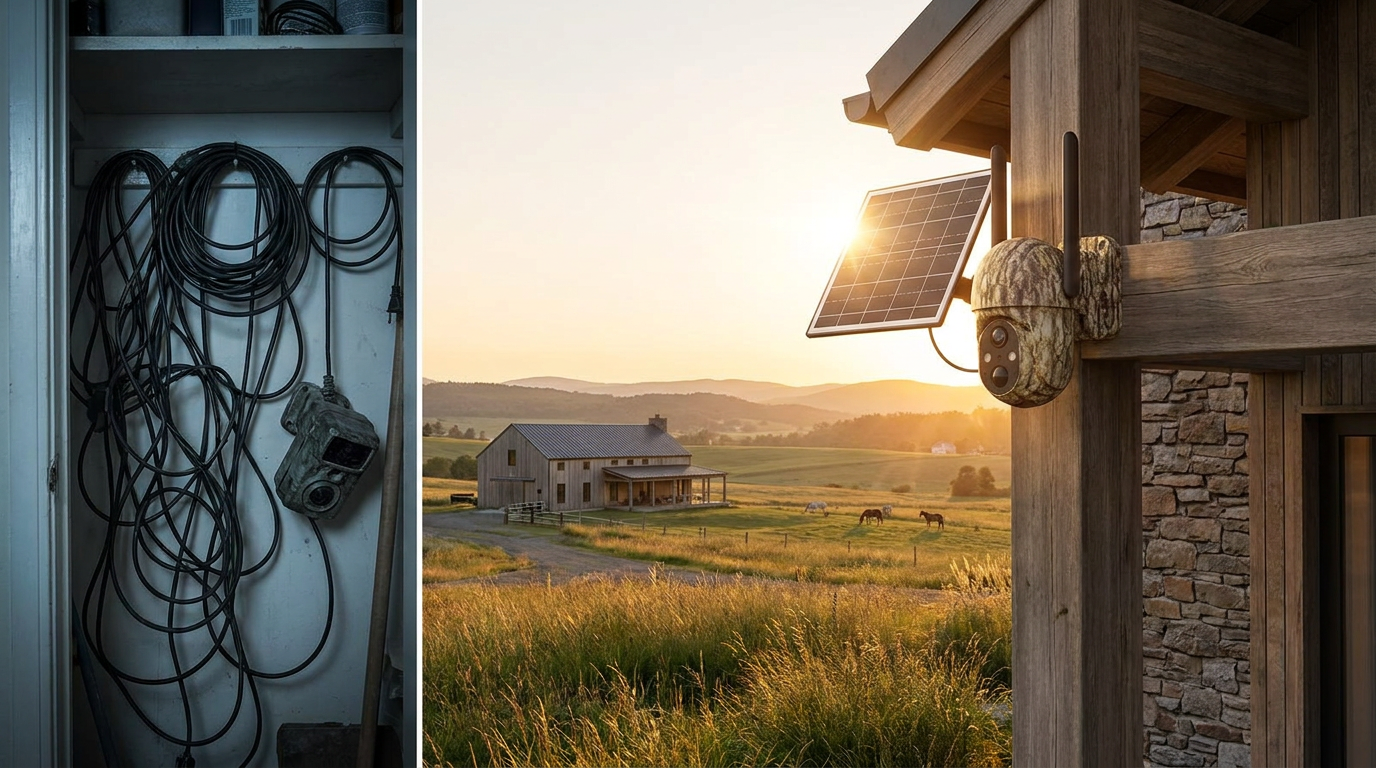
Solar Watch Cam Framework for Power Independence
 Priya RamanSenior Analyst
July 23, 2026 — The shift toward decentralized power in home security has accelerated as Solar Watch Cam introduces a more resilient alternative to fixed-line surveillance. While traditional wired systems have served as the industry standard for decades, the emergence of high-efficiency photovoltaic cells has fundamentally altered the decision-making process for property owners.
Selecting between these two architectures requires a move beyond surface-level features to look at the infrastructure requirements. According to LS Vision, solar cameras provide significant flexibility and long-term cost savings, whereas traditional wired models are often preferred for their continuous power delivery in high-traffic commercial environments. This distinction is critical when evaluating how a system will perform over a multi-year lifecycle. When reviewing the [top rated solar cameras for 2026](/blog/top-rated-solar-cameras-for-2026), it becomes clear that the gap in reliability between wired and wireless is closing rapidly.
The Power-Placement-Persistence Framework
To evaluate the Solar Watch Cam against a traditional wired setup, think of it as a matrix of three distinct variables: infrastructure cost, placement flexibility, and operational uptime. Two axes matter here: the physical constraints of the property and the frequency of motion events. Traditional wired cameras operate on a fixed-axis model, requiring professional conduit installation and a central NVR (Network Video Recorder). This creates a high barrier to entry in terms of upfront labor but ensures a constant stream of data. Conversely, the Solar Watch Cam utilizes an integrated power-to-battery system. As noted by OOSSXX, these units do not run directly from the sun but rather from an internal battery that is continuously topped off by a solar panel. This design allows for rapid deployment in areas where trenching cables would be cost-prohibitive.
Once you see it this way, the choice becomes a matter of assessing the environment. For solar powered security camera reviews, the primary metric is often how well the device manages energy during low-light periods. The Solar Watch Cam is engineered for high-efficiency capture, ensuring that even with limited peak sun hours, the device maintains its surveillance perimeter. The decision rule: if the installation site is more than 30 feet from a power source or requires monitoring a perimeter fence, the solar-integrated model provides superior utility. Conversely, for a front door with existing wiring, a traditional system remains a viable, if less flexible, alternative. This framework ensures that coverage is determined by tactical necessity rather than the location of the nearest electrical outlet.
Expert tip: When installing the Solar Watch Cam, ensure the panel receives at least four hours of direct sunlight; even a 10% obstruction from a tree branch can reduce charging efficiency by nearly half due to the series-cell configuration in modern panels.
By comparing these systems through a structured lens, homeowners can better understand the trade-offs in evaluating Solar Watch Cam performance in remote settings. While wired systems offer a legacy of stability, the modern Solar Watch Cam provides the autonomy required for comprehensive property protection without the constraints of a grid connection. For more insights, view our guide on top rated solar cameras for 2026.
Sources
- What is the Difference Between Solar Cameras and ...
- Solar vs Wired Security Cameras: Which Is Better for Home ...
- Solar-Powered vs. Wired Security Cameras: The Honest ...